Summary: the house, a moving stage
- Thermal insulation curtains aren't just accessories, they can also be the key to tamed comfort, between energy savings and a little battle against the heat or cold.
- The right materials make all the difference: velvet, aluminized lining, precise hemming - every detail weighs in the balance between hushed living room and charmless room.
- Installation takes time, never improvisation: the golden rule is to anticipate, measure wide, adjust and then enjoy the new-found calm, even if the installation requires courage and patience.
Lean against the wall, close your eyes, and listen for a moment: sometimes all it takes is a draft slipping under the door or too much direct sunlight to sweep us into a strange dance with our own home. Nothing is ever truly static under this roof: volatile temperatures, a shifting atmosphere, and, for the most sensitive among us, the moods of spaces that can be both irritating and delightful. It's as if comfort obeys no logic, but is fought for and negotiated with clever tricks.
Who among us has ever stopped in front of a thermal insulation curtain and thought that this piece of fabric would really make things better? Well, not many of us have, until we've experienced it for ourselves. After all, it's not a question of knocking down partitions to transform a room. Often, all it takes is a gesture, an intuition, or even a simple desire to break with routine to redesign daily life. That's the magic: a gentle change, a solution placed there almost by chance...
The principle of the heat-insulating curtain: gadget or real ally?
But then, what are these famous efficient thermal curtainsreally worth? They're not just a screen to be pulled aside in the evening. You're looking at a real partner in the domestic climate. Not just for looks, but for the sensation: heat retained (or coolness driven out), savings on bills, an otherwise more peaceful atmosphere at all hours.
How do curtains work? Which materials stand out?
It's impossible to confuse it with an ordinary curtain: its composition is intriguing, and it's not just a question of thickness. It can feature the muffled density of wadding, or a shiny aluminized lining that reflects thermal assaults far more than it dresses them. Some prefer velvet, others swear by reinforced polyester or wool hidden in the pleats: but what counts is the solid alliance between the inner face (for comfort) and the sturdy outer facade.
And, while we're at it, most of them have a little blackout effect, so you can combine dark naps with a controlled climate. When it comes down to it, comfort is written in layers: soft insulation, less noise, nights extended by a notch. Installing such a curtain means betting on lower energy bills and a summer that no longer rhymes with sweaty jitters.
Adaptation: Does the " thermal curtain " work well with all types of openings?
It's easy to imagine this curtain being reserved for modest windows, but why limit its use? The front door, bay window, partition of a makeshift office—anything can be adapted if it's worth the effort. But beware of the "quick fix" trap: each opening has its own character, requiring Curtain pole , precise measurements, and perhaps the generosity of a hem that kisses the floor, so that not a breath of air can escape.
Looking for a cosy living room? A hallway that doesn't play fridge in winter? The answer, always modular, can be invented room by room. Ears sensitive to the cacophony of the neighbors know: when the curtain isolates well, even Saturday night loses its virulence.
Installing your curtain: is it better to take action in winter or play the summer card?
Here's a dilemma as old as grandma's cushions. Should you wait for the first slap in the face of winter, or anticipate the warmer weather? It's not a question of timing or superstition: it's your feelings that decide. In winter, the aluminized lining acts as a barrier on the window side. On sunny days? Reverse the lining to keep the heat out. An insignificant detail? Certainly not for those who, on an August evening, remember having slept better than all summer...

Preparing for the heat-insulating curtain
Changing the atmosphere and keeping the cold out is no mean feat, but it does require a bit of organization. We list, we measure, we prepare to invite a new object that upsets the routine.
Which tools to choose? The hunt for accessories begins
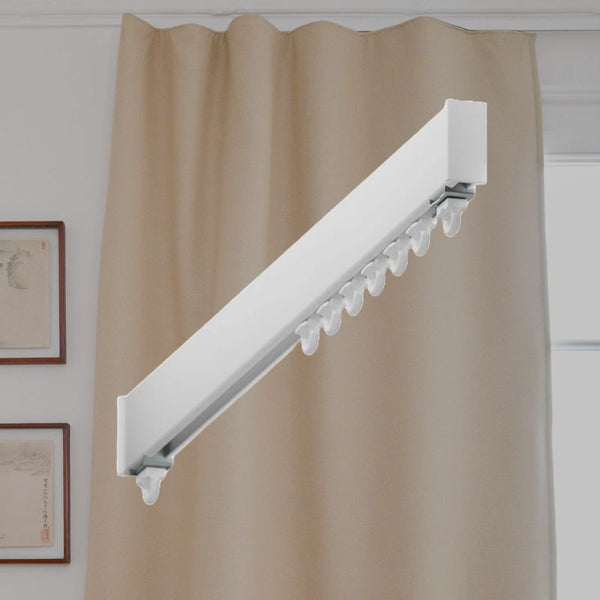
- Track and suitable Curtain pole Track
- Toolbox: drill, screwdriver, screws, hooks, dowels
- Tape measure, spirit level, pencil, stepladder, gloves, and a dash of courage
And let's not forget the rings, loops, brackets and wedges tailor-made for each configuration. The precaution, always admitted by true DIY enthusiasts: the large bay window doesn't have the needs of the attic dormer. Systems can be customized, there's no cheating with measurements.
Before installing, a checklist: has everything been gone over with a fine-tooth comb?
The secret is anticipation. Measure generously, add twenty centimeters to the right and left, allow enough height so that the bottom of the curtain brushes the floor. Inspect Curtain pole, wall, fixings, and the condition of the joints, because the slightest weakness can become a flaw. Don't overlook what may seem like a minor detail!
Staging the installation: preparing the ground to avoid drama
A piece of furniture moved, a rug rolled up, the memory of a broken vase... It all starts with clearing the space. You vacuum, remove the old curtain, mark the right line, and voilà: the curtain is in place, adding a decorative touch if you put your heart into it. A memory from a family workshop recommends placing a wedge under the Curtain pole there's nothing better for creating the impression of an impenetrable barrier.
Install your heat-insulating curtain without any false steps
The key is precision: forget about Curtain pole or curtains that gape open. Take your time. Fix the brackets, drill, screw without rushing. Hang, adjust, contemplate, correct any slack or angles. The first night is when everything comes together: the echo of the street fades, the frost retreats, and even waking up seems more peaceful.
Thermal face, where to? A choice that changes everything
Classic trap: orientation. The aluminized side faces the window when it's cold, and reverses when it's hot. We sometimes laugh when we invent stories about capricious curtains, but this detail weighs heavily on the quality of nights or heatstroke in the office. The experience of a do-it-yourselfer takes root: reversing sometimes means rediscovering your sofa.
Tips for going beyond simple installation?
After installation, why stop so close to the goal? Some swear by wide rods, others by extra glue (even for brand-new curtains). Adjusting the curtain so that it skims the floor, pinning it lightly to the wall... These little gestures are particularly useful on noisy evenings or in a child's bedroom. Silence, achieved almost by accident.
At the end of the operation: how do you know if everything has been properly installed?
The hand glides along the curtain, looking for the slightest breath of air. If everything holds, if nothing falters, mission accomplished. If there's the slightest weakness: adjust, double, correct without getting upset. You can see the difference on the faces of the people who live here, as comfort reclaims its rights without unnecessary calculations.
Nokomis, or the temptation of silence
What if silence were the true luxury? Nokomis almost whispers Nokomis promise in your ear. Curtains, yes, but not only that: behind it all lies a masterful craftsmanship of calm, rest, and a welcoming cocoon (a living room that becomes a refuge, an office that forgets the city).
Made in France, sewn with the idea of a gentler world, each panel seeks to erase the tumult, to invent a room where noise is silent. Ten years of chasing noise pollution leaves its mark: comfort, peace, and that little pleasure of closing the window to the rest of the world.
Further help on how to install a thermal insulation curtain
How to position thermal curtains?
When it comes to placement, there are a few rules to follow for the “ thermal curtain .” Who would have thought that a piece of fabric could provide so much protection from the cold? The trick: the thermal lining—your best ally. When winter hits hard, the silver, aluminum-coated side—which is cleverly designed—should face the inside of the curtain, not the windows. The goal is to reflect heat back into the room (because we’re not heating the street, are we?). And the acrylic side acts as a barrier against the cold seeping in through the window. Picture this scene: curtains drawn, heat retained. Suddenly, the window is no longer the weak spot.
Are thermal curtains effective against the cold?
Barrier effect, “ thermal curtain ” at attention: yes, it’s effective—and even more so than you might think. This thermal-insulating curtain, a true bulwark for windows, blocks the cold in winter and the heat in summer. When it’s bitter outside, it keeps the room cozy, maintains a comfortable temperature, and cuts off the bite of drafts. It’s not just a curtain—it’s a barrier that heat refuses to cross. You pull this fabric closed, and suddenly, winter stays outside. It’s no miracle, but sometimes it adds a few degrees, simply because a well- thermal curtain d curtain does the job.
Do the curtains have to touch the floor?
Should they touch the floor—or even drape out a bit? That’s THE big question when it comes to curtains. Today, the trend leans toward long curtains—elegant, almost regal, skimming the floor. However, thermal curtains aren’t meant to drag on the floor, collect dust, or get tangled up in your shoes: it’s all about finding the right balance—that perfect floor-skimming length, neither too short (hello, drafts) nor too long (goodbye, elegance). Measure from the top of the window to the floor, envisioning a clean, straight line. Because, let’s face it, a well- thermal curtain is also a statement of style.
What is the difference between an insulating curtain and a thermal curtain ?
The insulating curtain and the “ thermal curtain ”: same thing? Not really. The insulating curtain works on all fronts: sound, heat, and sometimes just light. The “ thermal curtain,” on the other hand, focuses entirely on temperature and keeps the cold (or heat—let’s be fair) at bay. Why quibble over words? Because an “ blackout curtain ” blocks out light but lets the cold slip through. Meanwhile, the thermal curtain, equipped with its thermal lining (aluminum, acrylic, layered materials), stands up to temperature fluctuations. Two heroes, each with its own power. The right choice depends on your needs: light, sound, or—most importantly—indoor temperature.