In short
Sound insulation: Blocking sound and absorbing echoes are two completely different processes.
- Acoustic foam does not block noise from neighbors; it absorbs internal resonance.
- The mass-spring-mass principle remains the technical standard for damping airborne and impact noise.
- A poorly sealed door negates 80% of the efforts made on the walls and ceiling.
Soundproofing falls into two categories that most online tutorials blithely confuse. On the one hand, blocking sound from traveling through walls, ceilings, and floors. On the other, improving a room’s acoustics to prevent sound from bouncing around inside it. These two goals require radically different materials, techniques, and budgets. Before buying anything, making the right assessment makes all the difference. You might even opt for soundproof curtains.

What the Top 10 Doesn't Tell You: " sound insulation " and acoustic correction are two different challenges
Blocking incoming sound versus absorbing reverberating sound: a costly misunderstanding
Soundproofing with an thermal curtain and insulation is designed to prevent sound from traveling from one space to another. Acoustic treatment, on the other hand, reduces noise disturbances within the same room—those echoes that make your voice sound like it’s coming from a tiled bathroom. The bottom line: studio foam installed in a living room improves the room’s acoustic comfort, but it doesn’t reduce the noise coming from the neighbor above by a single decibel. There’s a lot of confusion here, and retailers aren’t doing anything to clear it up.
Why is installing acoustic foam on a shared wall completely pointless?
A shared wall primarily transmits airborne noise: voices, music, and television. To block this noise, the laws of physics require mass and decoupling. A 45-mm-thick high-density rock wool panel mounted on a metal framework decoupled from the load-bearing wall reduces sound transmission by approximately 40 dB. Acoustic foam, under the same conditions, reduces sound transmission by at most 3 to 5 dB. On a shared wall, this difference is the difference between silence and a war zone.
The mass-spring-mass principle that YouTube tutorials oversimplify all too quickly
The mass-spring-mass system places a flexible material (the spring) between two dense materials (the masses). Mineral wool acts as a shock absorber, while drywall or wood panels serve as the masses. This “sandwich” absorbs vibrational energy before it passes through the wall. Popular tutorials often show a single layer, without decoupling. The effect on impact noise remains limited because the structural framework continues to vibrate and transmit sound throughout the entire building structure.
Identify the source of the noise before buying anything
Airborne noise, impact noise, structure-borne noise: Identifying the source changes everything about the solution
Airborne noise travels through the air: conversations, television, barking. Impact noise results from a direct mechanical impact on a surface: footsteps, falling objects, children running. Structure-borne noise propagates through the building’s structure itself: vibrations from a washing machine, pipes, an elevator. Each type requires a distinct technical solution. Double-wall construction addresses airborne noise. A floating screed or acoustic underlayment addresses impact noise. Decoupling equipment addresses structure-borne noise.
How can you test your home for acoustic weaknesses on your own in 20 minutes?
Here’s a simple, tried-and-true method. Close all openings in the room you want to soundproof. Ask someone to make some noise in the room or the adjacent unit. Slowly run your hand and ear along the baseboards, light switches, ventilation ducts, and around the edges of doors and windows. Acoustic hot spots will be clearly noticeable. An electrical switch shared between two apartments often acts as a direct sound bridge that no one thinks to address first.
What kind of insulation should I use to block out the noise from my neighbors?
The answer depends on the source of the noise. If voices are traveling through the partition, a decoupled false wall filled with 45 kg/m³ rock wool reduces the sound reduction index by 45 to 55 dB. If footsteps from upstairs are a problem, an acoustic underlayment beneath the hardwood floor or a floating screed on the upper-level subfloor is the only real solution. Treating your own ceiling without addressing the source remains a stopgap measure. We prefer to be honest about that.
What's the Best Sound Insulation? An Honest Comparison That No One Else Is Publishing
Rock wool, cellulose wadding, cork, plant-based wools: actual performance vs. marketing claims
| Material | Density (kg/m³) | Indicative Rw Index | Type of noise treated |
|---|---|---|---|
| Rock wool | 45 to 100 | 45 to 55 dB | Aerial + Impact |
| Cellulose wadding | 30 to 60 | 40 to 50 dB | Especially aerial ones |
| Expanded cork | 80 to 120 | 35 to 45 dB | Impact + Solidians |
| Sheep's wool | 20 to 40 | 30 to 40 dB | Medium-frequency aerial systems |
High-density rock wool remains the gold standard for walls and ceilings. Cork excels at soundproofing floors and reducing impact noise, particularly structure-borne noise. Cellulose fiber offers an excellent performance-to-carbon-footprint ratio for airborne noise. Plant-based fibers such as hemp are gaining traction thanks to a recent revolution in fire-resistant, bio-based materials.
Thickness, density, Rw rating: the three key figures to check before making a purchase
The NF EN ISO 717-2 standard measures sound reduction using the Rw index, expressed in decibels. The higher the Rw value, the more effectively the insulation blocks sound. The density of the material directly affects this index. A glass wool panel with a density of 12 kg/m³ does not perform as well as a panel with a density of 70 kg/m³ of the same thickness. Always make sure the technical data sheet includes these three pieces of information: thickness in mm, density in kg/m³, and Rw value in dB. Without these figures, the product isn’t worth your trust.
Acoustic metamaterials are entering the consumer market: how Metacoustic and its competitors are making a real difference
The startup Metacoustic is developing panels based on periodic structures that disrupt the propagation of sound waves without requiring significant mass. This metamaterial technology attenuates certain targeted frequencies with a thickness of just a few centimeters, whereas a conventional system would require 10 to 15 cm. For homes with low ceilings, this space-saving feature is a game-changer. The consumer market is still in its infancy, but the first commercial panels are already appearing.
sound insulation Sleek and efficient: when space savings are a deciding factor
High-Density Thin Wall Versus Traditional Partition Wall: A Centimeter-by-Centimeter Comparison
A standard partition wall with a metal frame, rock wool, and two layers of drywall requires 10 to 14 cm of depth for an Rw rating of 45 to 52 dB. A thin, high-density lining bonded directly to the wall (Bicapa system or equivalent) requires 4 to 6 cm for an Rw rating of 38 to 44 dB. There is a difference in performance. But in a 90-cm-wide hallway or a 9-m² bedroom, losing 14 cm of wall depth is equivalent to losing 1.5 m² of living space. The trade-off between space and acoustic comfort must be decided on a case-by-case basis.
sound insulation from the ceiling without sacrificing headroom: free-hanging suspended solutions
An acoustic suspended ceiling mounted on vibration-damping hangers mechanically decouples the structure from the load-bearing ceiling. Impact noise transmitted through the floor of the upper level no longer passes through the slab to resonate in your room. This technique requires 12 to 20 cm of headroom. Acoustic tile systems installed directly onto the ceiling (without a framework) save 6 to 8 cm but lose most of the benefit in terms of impact noise reduction. Decoupling remains essential for effective results.
Acoustic Floor Underlayments: Minimum Thickness, Maximum Performance
An acoustic underlay installed beneath floating hardwood flooring reduces impact noise from below. Cork or high-density polyurethane foam underlays achieve ΔLw ratings (impact noise reduction) of 17 to 24 dB with a thickness of just 3 to 5 mm. A floating screed over flexible insulation remains the most effective solution (ΔLw up to 30 dB) but requires at least an additional 5 cm of thickness and involves major construction work. For apartment flooring, the underlayment alone resolves 70% of complaints about footfall noise.
- Treat the floor with an acoustic underlayment
- A solution that doesn't require major construction work
- Compatible with hardwood and floating laminate flooring
- Effective only against impact noise
- Do not treat airborne noise coming from below
- Depends on the floor's tolerance for thickness
What is the most effective soundproofing material for your specific situation: renter, homeowner, or condominium owner?
Solutions for Renters That Don't Require Drilling or Glue: Removable Panels, Heavy Textiles, and Strategically Placed Furniture
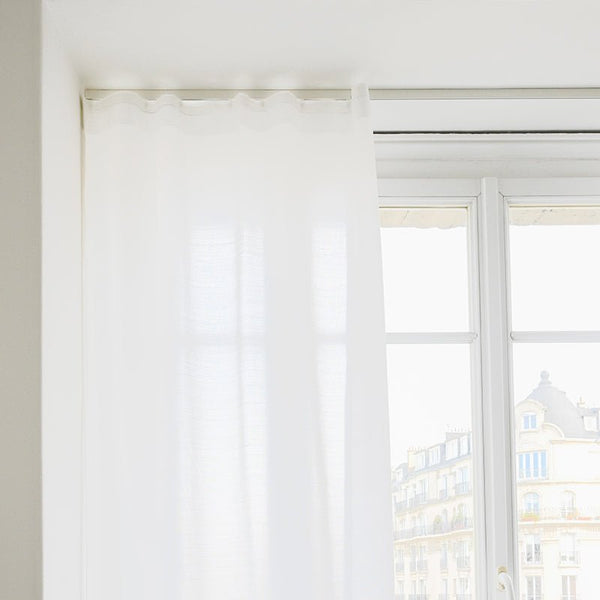
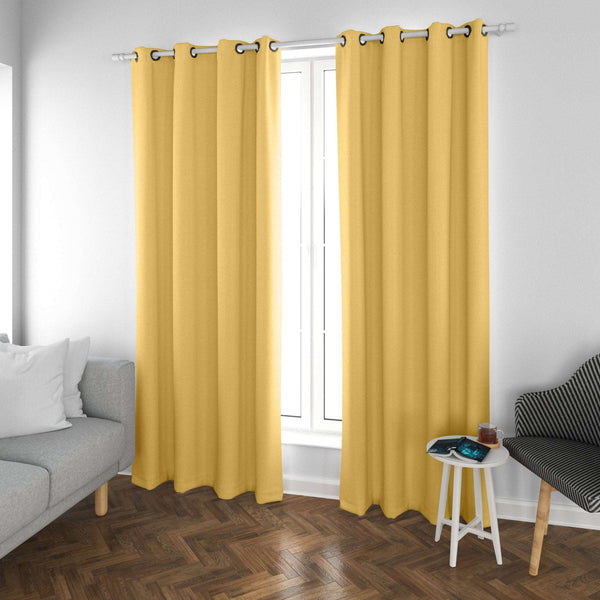
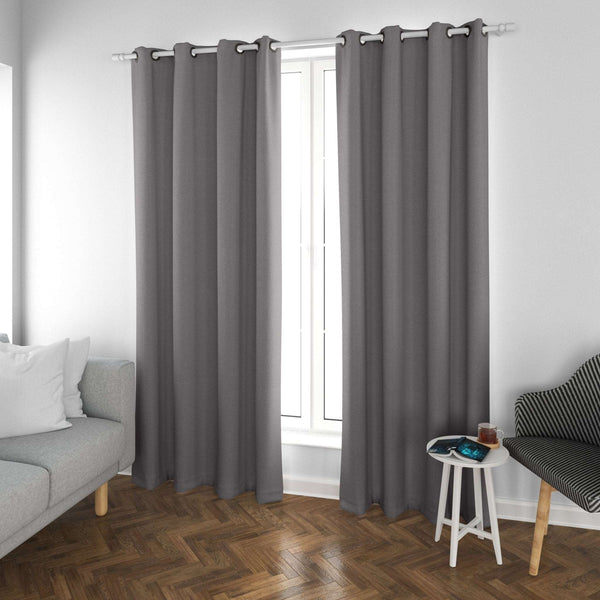
A tenant cannot undertake structural renovations. However, there are several solutions that effectively reduce noise disturbances. Removable acoustic panels secured with detachable fastening systems (industrial Velcro, freestanding frames) absorb some of the airborne noise in the room. Soundproof curtains, such as those offered by Nokomis —which are dense and heavy—reduce noise coming through windows by 10 to 30 dB, depending on the model. A well-stocked bookshelf adds mass without the need for drilling. While these solutions are no substitute for true soundproofing, they significantly improve everyday acoustic comfort.
Apartment Owners: What the NF S31-199 Noise Regulation Requires of You and What It Allows You to Do
The NF S31-199 standard, published by AFNOR, establishes acoustic comfort requirements for existing housing. It defines insulation indices for airborne noise between units (DnTA) and impact noise (L’nTA). A property owner undertakingsound insulation work on the partition walls of an apartment must aim for a DnTA of at least 53 dB to comply with the enhanced comfort recommendations. This work does not require a building permit but does require a prior declaration if the floor area changes.
Condominium: Who Pays for Sound Insulation Work on a Floor or Shared Wall Between Two Units?
A floor between two apartments is considered a common area for private use in most condominium bylaws. Any work that alters its structure requires a majority decision at a general meeting, as provided for in Article 25 of the Law of July 10, 1965. If the noise is coming from the floor of your upstairs neighbor, the ideal solution (installing underlayment or a floating subfloor) must be implemented in their unit. Without their consent or a collective decision, you have no legal recourse. A party wall that lies strictly between two private units, however, remains the shared responsibility of both co-owners.
Silence is not a luxury. It is a right that acoustic technology makes accessible—provided we do not confuse foam with mass.
How to Completely Block Out Noise: Why the "Zero Decibels" Goal Is a Myth and What Result You Should Really Aim For
Acoustic comfort thresholds certified by the CSTB: What 30 dB, 40 dB, and 50 dB Mean in Everyday Life
The CSTB (Scientific and Technical Center for Building) certifies acoustic performance levels through the Qualitel label. At 30 dB of residual noise in a bedroom, the sleeper perceives a quiet environment similar to that of a library. At 40 dB, a normal conversation remains audible but not intelligible. At 50 dB, the background noise is equivalent to that of a quiet street and disturbs light sleep. Current French regulations require new buildings to have airborne sound insulation of at least 53 dB DnTA between adjacent units.
The weak-link rule: a poorly sealed door negates 80% of the load on the walls
The acoustic performance of a wall is determined by its weakest link. A double-sheathed wall with an Rw rating of 52 dB combined with an unsealed interior door with an Rw rating of 20 dB results in an overall performance of 20 dB. Windows, roller shutter boxes, and air inlets are the primary sources of sound leakage. Double- or triple-pane acoustic glazing, compressible perimeter seals on doors and windows, and insulation of roller shutter boxes are the first steps to take before any wall lining is installed.
Combining thermal and acoustic insulation in a single step: situations where it’s cost-effective
Some materials serve a triple purpose: thermal, acoustic, and sometimes fire-resistant. High-density rock wool is the best-known example: it provides thermal insulation with a lambda conductivity of 0.034 to 0.040 W/m·K while achieving an Rw of 45 to 55 dB, depending on its thickness. Performing both tasks at the same time reduces labor costs by 30 to 40 percent compared to two separate projects. The most cost-effective approach is to install interior wall sheathing during a comprehensive home renovation.

Noise insulation starts with the right assessment
We waste too much time and money treating the wrong symptom. Identifying the type of noise, pinpointing the weak links, and choosing the right material for the specific situation can radically change the outcome. Acoustic curtains, removable panels, and heavy textiles are effective first-line defenses—accessible to everyone and requiring no construction work. Decoupling and mass, however, remain the only true solutions for structural sound insulation. No one will sell you a miracle solution because it simply doesn’t exist.
FAQ: Sound Insulation
What kind of insulation should I use to block out the noise from my neighbors?
The solution depends on the source. Airborne noise (voices, TV) requires a decoupled partition wall with high-density rock wool, achieving an Rw of 45 to 55 dB. Impact noise (footsteps, thuds) requires an acoustic underlayment or a floating screed. A dense noise-reducing curtain effectively reduces noise entering through windows by up to 30 dB.
What is the most effective soundproofing material?
High-density rock wool (70 to 100 kg/m³) offers the best overall performance against airborne noise, with an Rw rating of 50 to 55 dB when used as a full lining. Expanded cork at 80 to 120 kg/m³ excels at reducing impact and structure-borne noise. There is no single universal insulation material: performance results from the entire system (mass, spring, mass) rather than from any single material.
How can you completely block out noise?
Complete soundproofing is physically impossible in a standard home. A realistic goal is to achieve a residual noise level of less than 30 to 35 dB in bedrooms, which corresponds to the comfort threshold certified by the CSTB. To get as close as possible to this result, treat the walls, ceiling, floor, windows, and doors simultaneously, since any single weak link will limit the overall performance.