Reviews of a noise-reducing curtain can be helpful, but they are no substitute for a thorough technical evaluation. Before making a purchase, you should look beyond the overall rating, star ratings, and quick promises. A reliable soundproof curtain must be consistent in three areas: advertised performance, available evidence, and real-world usage conditions.
This guide provides a simple method for reading reviews, comparing offers, and avoiding unrealistic expectations before purchasing a noise-reducing curtain, a soundproof curtain , or a acoustic curtain.
1. Why Customer Reviews Aren't Always Enough
A customer review is helpful when it describes a specific situation: type of noise, room in question, curtain dimensions, delivery time, perceived quality, ease of installation, customer service, and the result achieved. On the other hand, an overall rating or a series of very brief comments does not always allow one to assess the actual performance of an acoustic product.
For a noise-reducing curtain, the experience varies greatly depending on the layout: a window facing the street, a front door, a stairwell, a bedroom, an office, or a living room each present different challenges. The type of noise also matters: voices, impact noise, traffic, motorcycles, and low-frequency sounds are not treated in the same way.
Before relying on reviews, look for detailed feedback rather than simple phrases like “very effective” or “good product.” The best reviews are those that explain the original problem and the actual results achieved.
2. Check #1: Is the acoustic claim documented?
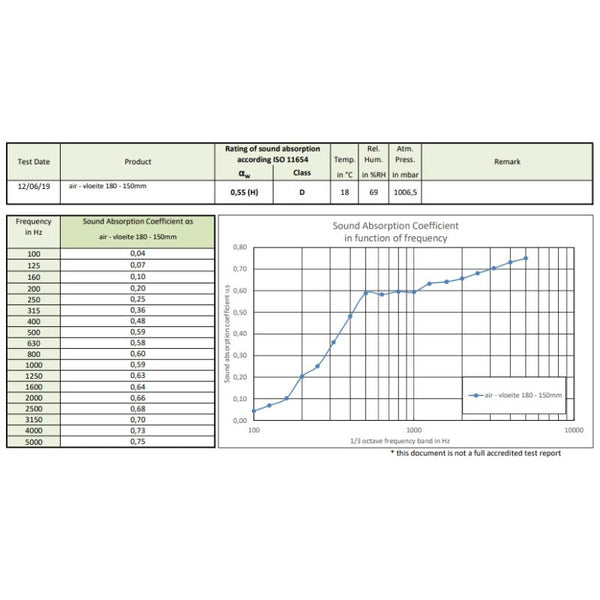
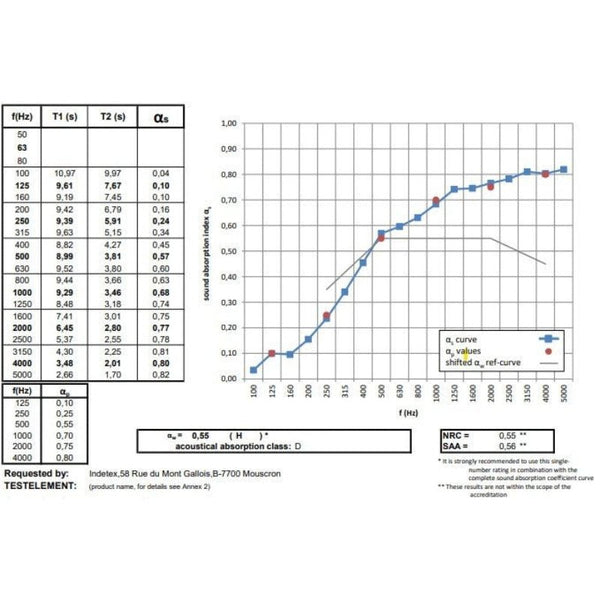
The first question to ask is simple: Is the claimed performance backed up by evidence? Terms such as “30 dB,” “noise-reducing,” “soundproof,” “sound-absorbing,” or “guaranteed effectiveness” must be supported by concrete evidence.
Check to see if the product page says:
- the laboratory that performed the test;
- the measurement standard used;
- the test protocol;
- the frequencies in question;
- the specific product that was tested;
- the dimensions tested;
- the installation conditions during the test.
Without this information, a decibel reading remains difficult to interpret. It may represent a maximum value under specific conditions, an estimate, or a marketing claim that is too general.
To learn more about this topic, you can read our comprehensive guide: noise-reducing curtain 30 dB: How to Verify True Acoustic Performance. See also: 3 Ways to Tell if a Lab Report Is Genuine.
3. Check #2: Do the reviews mention noise, or just comfort?
Many positive reviews mention overall comfort: comfortable fabric, a quieter room, attractive color, better heat retention, and better light blocking. These factors are important, but they do not automatically prove soundproofing performance.
A curtain can be:
- light-blocking, if it blocks the light;
- thermal, in that it reduces the sensation of cold or heat;
- decorative, if it enhances the atmosphere of the room;
- acoustic, if it is designed and documented to reduce noise pollution.
These functions are often confused. A heavy curtain may give the impression of comfort, but a true “ soundproof curtain ” must be designed as an acoustic solution: mass, structure, installation, overhangs, height, continuity, and minimization of air gaps.
4. Check #3: Do the reviews match your problem?
A positive review of a quiet room does not guarantee good results for a window facing a boulevard. Similarly, a curtain that effectively reduces echoes may not necessarily be sufficient against low frequencies, motorcycles, or a door that lets in a lot of noise.
Before you buy, try to compare the reviews to your actual situation:
- Outside noise or inside noise?
- Window, door, picture window, or room divider?
- Noises from voices, traffic, music, neighbors, or the stairwell?
- A one-time need or a daily nuisance?
- Standard curtain or custom curtain?
The more a review resembles your own situation, the more useful it is. Conversely, a very general review should not be used as evidence of performance.
5. Check #4: Are the installation instructions clear?
The performance of a soundproof curtain depends heavily on how it is installed. An excellent fabric that is installed too short, too narrow, or with large gaps on the sides will be less effective than a properly sized curtain.
Things to check before buying:
- Does the curtain extend far enough on each side of the opening?
- Does it reach all the way to the floor, or almost?
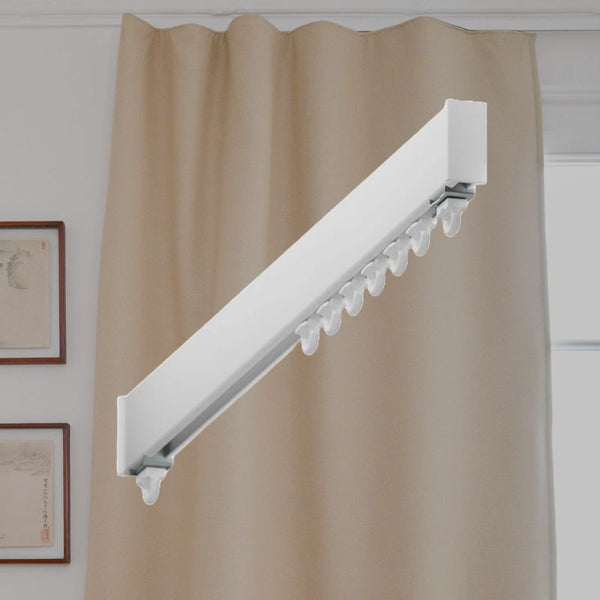
- Can the Track Curtain pole the weight of the curtain?
- Is airflow restricted at the top, bottom, and sides?
- Is the specified width sufficient to actually cover the area?
A reputable salesperson should explain these points. Installation is part of the acoustic solution, not just a matter of decoration.
6. Check #5: Are the terms and conditions clear?
Customer reviews don't just focus on product performance. They often highlight very specific issues: delivery times, order tracking, returns, refunds, packaging quality, customer service, and whether the color or finish matches the description.
Before you buy, be sure to check the following:
- the estimated delivery time;
- the country or shipping method, if available;
- return policy;
- return shipping costs;
- exclusions on custom products;
- the procedure to follow in the event of a defect, error, or nonconformity;
- the existence of a clearly identifiable company.
A product may seem appealing at the time of purchase, but it can become problematic if delivery times, return policies, or customer service are unclear.
7. Check #6: Is the price consistent with the promise?
High-performance acoustic curtain s are generally technical products: heavy fabric, multi-layer construction or specialized textiles, tailored construction, precise dimensions, durable finishes, compatible Track , and more demanding logistics.
A very low price combined with a very high-sounding promise should therefore be viewed with caution. This does not automatically mean that the product is bad. But it should prompt you to ask for more information: actual weight, composition, dimensions, acoustic testing protocol, installation requirements, and return policy.
The right approach isn't to choose the most expensive curtain, but to choose the option that best balances price, technical specifications, craftsmanship, and customer support.
8. Check #7: Does the seller explain the limitations?
A reputable manufacturer does not promise absolute silence. Instead, they explain what a curtain can do, what it cannot do, and under what conditions it will perform best.
soundproof curtain s can improve acoustic comfort, reduce certain types of sound transmission, and make a room more pleasant. However, they are no substitute for a complete acoustic renovation, replacing windows, or making structural changes to the building.
Transparency about limitations is a positive sign. In acoustics, overly simplistic promises are rarely the most reliable.
How NOKOMIS Soundproof Curtains
At NOKOMIS, we take a practical approach: understanding the need, selecting the right product line, recommending a suitable installation, and explaining the limitations. A soundproof curtain should be chosen as a complete system, not just as a decorative accessory.
Our line of acoustic and soundproof curtains is designed to meet a variety of needs: acoustic comfort, enhanced sound insulation , improved thermal performance, light blocking, and space partitioning.
For the most demanding applications, the Performance PLUS braided model offers a high-end soundproofing solution that has been laboratory-tested. A satin version is also available: Performance PLUS Satin.
FAQ — Reviews of Soundproof Curtains
Can you rely on customer reviews when choosing a noise-reducing curtain ?
Customer reviews are helpful if they are detailed and relevant to your situation. However, they are no substitute for technical evidence: laboratory test results, standards, protocols, frequencies, the product being tested, and installation conditions.
Does a curtain with a lot of positive reviews necessarily block out noise effectively?
No. Many reviews may focus on color, fabric, delivery, or light-blocking capabilities. To assess soundproofing effectiveness, you need to look for reviews that specifically mention noise and check the acoustic data.
Can a thermal curtain reduce noise?
It can improve perceived comfort, but it is not automatically soundproof. A acoustic curtain must be designed and documented to address noise disturbances.
What should you ask before buying a noise-reducing curtain ?
Ask for the laboratory, the standard, the protocol, the relevant frequencies, the exact product being tested, the installation conditions, and the realistic limits for your setup.
What's the best sign that someone is serious?
A reputable salesperson explains the benefits, but also the limitations. They don't promise complete soundproofing with just a curtain. They help you choose a solution tailored to your specific noise issue and your setup.
Conclusion: Good opinions are no substitute for solid evidence
Before buying a noise-reducing curtain, read the reviews, but don't just focus on the star ratings. Look at the overall consistency: acoustic performance claims, available evidence, installation conditions, quality of explanations, delivery times, customer feedback, and seller information.
An effective " soundproof curtain " is more than just an impressive number. It is a textile solution that must be understood, sized, and installed correctly.
Are you trying to decide between several soundproof curtains?
Send us the dimensions of your window, door, or opening, along with the type of noise disturbance. We’ll help you find the best solution.